
Human actions worsen flooding in Lagos – State Govt
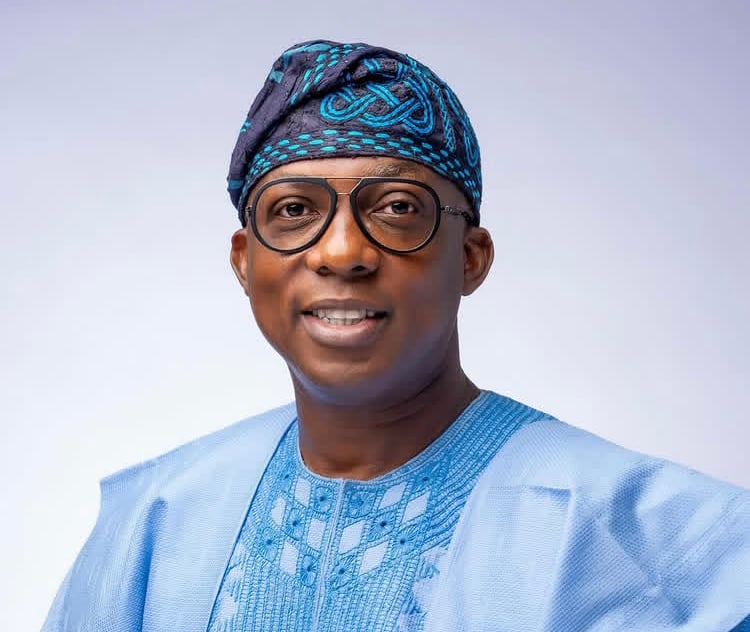
Tokunbo Wahab
The Lagos State Government has acknowledged that human interference with natural ecosystems is contributing significantly to recurring flooding across the state.
The Commissioner for Environment and Water Resources, Tokunbo Wahab, made the disclosure on Wednesday during a strategic meeting with a Nigeria Disaster Risk Management team from the World Bank held at Alausa.
Wahab said while Lagos remains naturally vulnerable to flooding as a coastal state, actions such as building on floodplains, blocking drainages, and destroying mangroves have worsened the situation.
According to him, about 25 per cent of Lagos landmass is covered by water, while the state is bounded in the south by approximately 486 kilometres of the Atlantic Ocean, natural factors that already expose it to flash flooding.
“The state is bounded in the south by 486 kilometres of the Atlantic and about 25 percent of Lagos land is water, these are natural realities that expose the state to flash flooding,” Wahab noted
He explained that mangroves and wetlands serve as natural protective barriers against flooding, but human encroachment and environmental abuse have weakened these defences.
The commissioner said the state government has continued to issue early warning signals at the beginning of each year to alert residents about potential environmental risks, including heavy rainfall, sea-level rise, and flooding.
He added that with the Nigerian Meteorological Agency’s rainfall forecast expected later in the month, the government would again communicate warnings to residents and relevant agencies, including the Lagos State Emergency Management Agency, LASEMA, and the State Command and Control Centre.
Wahab noted that despite investments in drainage infrastructure and year-round dredging and cleaning of primary, secondary, and tertiary channels, flooding cannot be completely avoided.
He explained that during periods of heavy rainfall, tidal lock often occurs, preventing storm water from discharging into the lagoon or sea, regardless of the level of infrastructure in place.
“Science has shown that when tidal lock happens, storm water cannot flow out, even with resilient infrastructure and early warning systems,” he said.
He added that the government had intensified enforcement of environmental laws to curb practices that worsen flooding, stressing that Lagos must balance urban development with environmental sustainability.
The commissioner also said decisions such as the ban on single-use plastics were informed by the state’s environmental realities, noting that plastic waste often blocks drainage channels and worsens flooding.
“The state chose to ban single-use plastics some time ago even when some countries in Europe had not banned it but Lagos had to do it because of the state’s peculiarities, saying that the state is willing, ready and open to work with the World Bank.” He added
Speaking at the meeting, the Commissioner for Economic Planning and Budget, Mosope George, said the partnership with the World Bank was aimed at identifying areas of high disaster risk and strengthening response mechanisms.
Earlier, the World Bank’s Team Lead and Senior Disaster Management Specialist, Francis Nkonka, said the engagement was designed to assess gaps in Lagos State’s emergency preparedness and response systems.
He said the World Bank had visited fire and rescue agencies in the state, where challenges related to equipment, facilities, personnel, and data management were identified.
Nkonka said the organisation intends to support Lagos with technical and investment assistance to improve disaster risk management and emergency response, adding that the state could serve as a model for other parts of the country.