
Lagos bans ‘korope’ buses amid protest
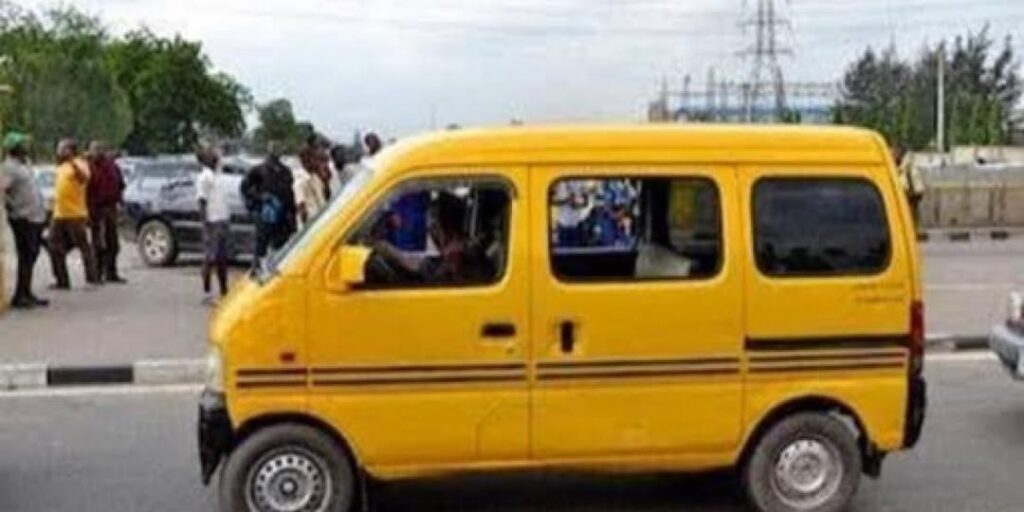
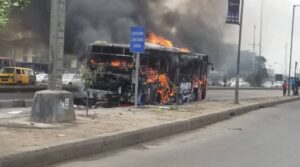
The Lagos State Government has faulted the blockage of traffic along the CMS–Lekki–Epe Expressway by some mini-bus operators, popularly known as korope, describing the action as a breach of earlier agreements reached with transport unions.
In a statement issued by the Lagos State Ministry of Transportation, the government said the disruption occurred on Tuesday, February 17, and Wednesday, February 18, 2026, despite extensive consultations with key stakeholders.
According to the statement, the government had engaged the two major transport unions, the National Union of Road Transport Workers (NURTW) and the Road Transport Employers Association of Nigeria (RTEAN), before rolling out reforms for the Lekki–Epe corridor.
Speaking on behalf of the government, the Special Adviser on Transportation, Hon. Sola Giwa, said the actions of the protesting operators undermine the Bus Reform Initiative (BRI), a programme designed to improve transportation services along the busy axis.
“Such disruptions go against the agreements we made with the unions.
“The government has worked closely with all stakeholders to provide safe and efficient transportation for Lagos residents. We strongly encourage all operators to comply with the reform in the interest of commuters and the state,” Giwa said.
The Bus Reform Initiative, which was first discussed in 2024, is aimed at restructuring public transportation on major routes. The plan includes deploying high-capacity buses, relocating korope and mini-buses to inner arterial roads, introducing e-ticketing, regulating bus operations, and strengthening security along the corridor.
At a stakeholders’ meeting held on June 27, 2024, a formal agreement was endorsed by Giwa, the Permanent Secretary of the Ministry of Transportation, and the state leadership of NURTW and RTEAN. The meeting outlined the framework for the reform and stressed the importance of cooperation among all parties.
A follow-up meeting on December 2, 2025, fixed December 8, 2025, as the official commencement date of the reform. The first phase covers four major routes: Ajah–CMS (Marina)/Obalende, Ajah–Oshodi, Ajah–Berger, and Ajah–Iyana Ipaja.
Under the arrangement, one operator provides express services, while others run regular stopping services along the corridor.
All buses participating in the scheme are painted in the standard Lagos State blue-and-white colour scheme. They are fitted with QR codes embedded in PTCS stickers for verification, unique identification numbers, and Touch and Pay (TAP) stickers. Drivers are also required to display official Ministry of Transportation badges to promote accountability and boost commuter confidence.
Giwa reiterated the government’s commitment to formalising transport operations, improving commuter comfort, enhancing safety, and maintaining fare stability across the state.
“The success of this initiative depends on the cooperation of all transport operators.
“The state remains determined to protect commuters’ interests and ensure that Lagos continues to operate as a safe and efficient transport city,” he said.
The State Government added that it will continue engagement with stakeholders while strictly enforcing the Bus Reform Initiative, warning that non-compliance will not be tolerated.