
Osinbajo Blames Impunity, Justice System Failure for Rising Violence in North-Central

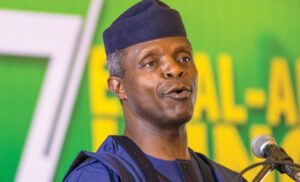
Former Vice-President Yemi Osinbajo has blamed impunity and weaknesses in Nigeria’s justice system for the persistent violence and insecurity in the North-Central region and other parts of the country.
Osinbajo spoke on Monday in Plateau State at a forum organised by the Justice Research Institute in partnership with the National Institute for Policy and Strategic Studies. The event focused on addressing polarisation and rebuilding civic cohesion in North-Central Nigeria beyond ethnic and religious divisions.
The former vice-president said lasting peace would remain difficult to achieve without accountability for wrongdoing and an effective justice system capable of protecting the rights of citizens.
“Impunity destroys the fabric of society. There must be clear and enforceable consequences for wrongdoing and offences committed against the state or individuals,” he said.
He added that reconciliation would be difficult without justice and accountability for those responsible for violations.
“If there are no consequences for actions taken under any guise, there will be no way to rebuild and reconcile. Peace cannot be built without justice,” Osinbajo said.
He also called for the restoration of properties and communities taken from their rightful owners, particularly in areas affected by violence and displacement.
According to him, people forced to leave their ancestral homes should be assisted to return, while victims of unlawful land occupation and other abuses should receive appropriate compensation.
“Those who have been displaced and whose communities or villages have been illegally occupied must be returned to their ancestral homes. Victims must also be compensated,” he said.
Osinbajo urged the government to undertake urgent reforms of the justice system, arguing that existing weaknesses had undermined the delivery of justice and contributed to persistent grievances.
He also called for deliberate reconciliation efforts involving government institutions, civil society organisations and religious leaders.
The former vice-president cited Rwanda as an example of a country where deliberate efforts by leaders and the government helped communities rebuild relationships following conflict.
He said Nigeria’s political and social leaders had a responsibility to promote unity and discourage attitudes that deepen divisions among citizens.
Earlier, the Director-General of NIPSS, Prof. Ayo Omotayo, said storytelling could play an important role in peacebuilding and national reconciliation.
He noted that narratives about different communities could either promote solidarity or deepen grievances when distorted or manipulated.
Also speaking, the Emir of Lafia and former Chief Justice of Nigeria, Justice Sidi Bage, said conflicts often began when people were denied justice, identity and a sense of belonging.
Bage urged Nigerians to avoid narratives that widened divisions between indigenes and settlers, farmers and herders, or people of different religious backgrounds.
He stressed the importance of communication and active listening in resolving grievances before they escalated into violence.
The forum called for stronger justice institutions, accountability and sustained peacebuilding efforts to address insecurity and rebuild trust among communities in North-Central Nigeria and beyond.