Lagos -Calabar coastal superhighway will reshape Niger Delta economic future – Umahi
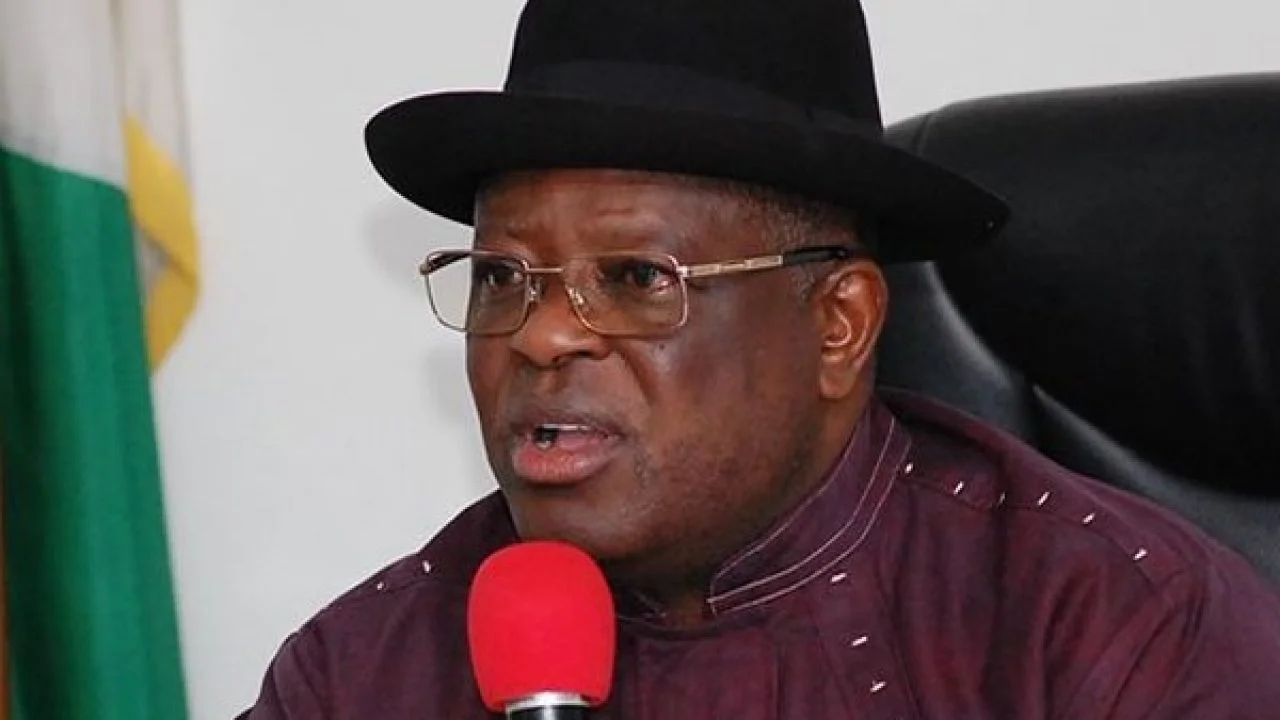
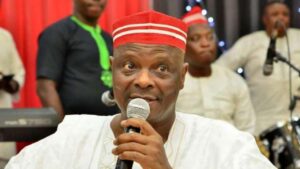
Minister of Works, Senator David Umahi has told the people of Niger Delta region that the Lagos -Calabar coastal superhighway, one of the legacy projects of President Bola Tinubu which cut across states of the federation, will reshape the economic future of the region.
He stated this during inspection of Section 4B of the Lagos-Calabar Coastal Highway in Ondo State .
He explained that the Renewed Hope flagship infrastructure project of President Tinubu was making steady progress, creating thousands of jobs, improving security and opening new opportunities for commerce, agriculture and education.
He urged the people of Niger Delta to support and defend the transformational project of the President, describing it as one that will reshape the economic future of the region.
“It is up to Niger Delta people to open their mouth and defend these projects. Of course, they should defend the project. They should defend the president. They must have to vote for the president to complete this project”, he said
Umahi maintained that opposition to the coastal highway does not reflect the interests of the Niger Delta people.
“Those who are attacking the coastal highway, they don’t have love for the Niger Delta people”, the Minister said.
He clarified opinion former Cross River State Governor, Donald Duke, that the Lagos-Calabar Coastal Highway may not go beyond Epe and explained that construction has already progressed beyond the area and is advancing steadily across several states.
Recalling Donald Duke’s opinion on the project, Umahi pointed out that the facts on the ground have now answered every doubt.
“So the Lagos-Calabar Coastal Highway is already on sail. And then so we have sail past Lagos that my brother Donald Duke talked about.”
“We are also on sail at Ogun, 28KM, on sail at Ondo, 52KM, all by two. We are already on sail in Calabar, 27km, and the Akwa Ibom, the first section of Akwa Ibom is about 47km.
“Those jobs are over 60 percent done. And we are on sail in the longest section of this Lagos-Calabar, that is at Akwa Ibom, 180km by two”, he stated.
Umahi emphasised that the coastal highway is not just about connecting communities but about transforming lives through employment, improved security and economic prosperity.
“Roads are source of employment. We’ve counted over one thousand people within this section employed by HITECH. It is creating a lot of direct and indirect jobs. It is also solving the problem of insecurity.
“Because anywhere we are working, we have a lot of security people working along the corridor. We have the local people that are also helping, and they have their vigilante, they have their local security, and so it is helping. It is opening a lot of corridor for commerce, for agriculture, for education.”
The Minister maintained that constructive criticism remains welcome, provided it is accompanied by practical alternatives. “So if you want to criticize us, I’ve said it, criticize us constructively and offer alternatives.”
Umahi further explained that President Tinubu remains fully committed to delivering the Lagos-Calabar Coastal Highway, expressing confidence that the project will be completed. “According to the words of President Bola Tinubu, he said this project will be done. With God on his side, it will be done.”
The Minister described the Lagos-Calabar Coastal Highway as one of the most transparent and economically prudent infrastructure projects ever undertaken in the country.
“This project is the most prudent project I’ve ever seen. When the Deutsche Bank people came to finance the first section, they said that the construction was in perfection. They said the design was in perfection, but the procurement, the cost was undervalued. And that’s why when they put it in the market, it was oversubscribed by 100m US dollars. And that is our bragging right as Minister of Works.”
Responding to concerns that the highway alignment was altered to benefit private estates, Umahi clarified that the route was changed solely on engineering and economic considerations.
He explained that the original proposal along the coastline encountered soil deposits as deep as 50 metres, making construction technically difficult and prohibitively expensive. He further noted that the original alignment would also have required bridges across three large ocean channels measuring about 3.5 kilometres each, significantly increasing the project’s cost.
Umahi, a former Governor of Ebonyi State, pointed out that the revised alignment followed President Tinubu’s directive to ensure that the project remained achievable without compromising quality.
“This is because the president wants Ministry of Works as much as possible to see how we minimize large ocean, body waters and then rivers. So we have to navigate it in compliance to the directive of the president that this must be realized.”