
Obasanjo recounts rejecting US asylum offer before Abacha’s arrest

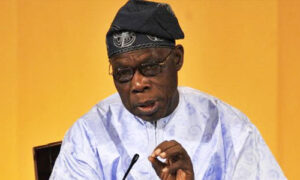
Former President Olusegun Obasanjo has narrated how he rejected an offer of political asylum in the United States before returning to Nigeria, where he was arrested and imprisoned by the late military Head of State, General Sani Abacha.
Obasanjo said the then United States Ambassador to Nigeria, Walter Carrington, contacted him while he was abroad and warned that he would be arrested if he returned to the country.
The former president disclosed this while recounting his experience under Abacha’s military government in an interview with BBC News Pidgin.
He said he declined the asylum offer because he believed he had committed no offence that would warrant his fleeing Nigeria.
According to him, he had retired from the military at the age of 42 after attaining the rank of a four-star general and serving as Head of State from 1976 to 1979.
Obasanjo said he subsequently ventured into farming, but his activities were disrupted by his arrest under Abacha.
“Abacha had decided that I must be liquidated; otherwise, he would not be able to have his way,” he said.
He recalled that after rejecting the asylum offer, he returned to Nigeria, where his passport was seized before security operatives surrounded his farm in Ota, Ogun State.
Obasanjo said one of the operatives later approached him in civilian clothes, claiming that an Assistant Inspector-General of Police had invited him to assist with an investigation.
He said he rejected the manner in which the invitation was delivered and drove himself to the police station.
According to him, the AIG informed him that he had been instructed to arrest him.
The former president also recounted the intervention of former US President Jimmy Carter, who pleaded with Abacha on his behalf.
He said the intervention initially resulted in his being placed under house arrest before security operatives took him to prison at about 1am on a particular day.
Obasanjo was arrested in March 1995 over allegations of involvement in a plot to overthrow Abacha’s government. A military tribunal sentenced him to life imprisonment, but the sentence was later reduced to 15 years.
He regained his freedom in June 1998 following Abacha’s death and was elected president in 1999. He served two terms, leaving office in May 2007.