
Makinde: Tinubu Rejected My Ministerial Nominee Despite My Support for His Election
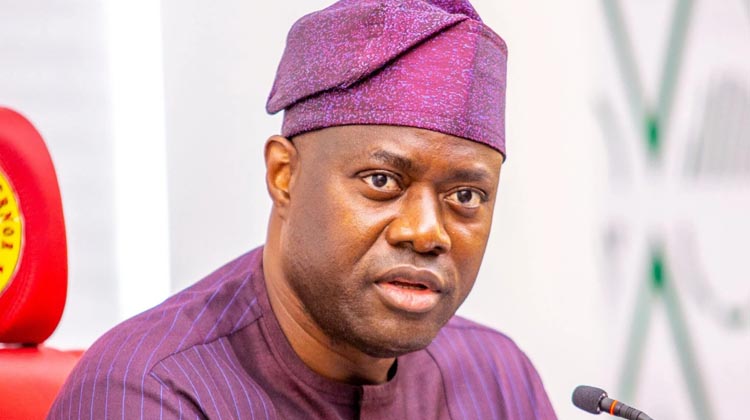
Oyo State Governor Seyi Makinde has revealed that President Bola Tinubu appointed Adebayo Adelabu as a minister in 2023 despite his recommendation of a former state commissioner, Bimbo Adekanmbi, for the position.
Makinde disclosed this during a radio appearance on Fresh FM in Ibadan, where he recounted his discussions with Tinubu following the 2023 presidential election.
The governor said he had supported Tinubu’s presidential ambition with the expectation that the administration would promote national unity and accommodate people from different political parties.
According to him, he had asked the president about the role Oyo State would play in his cabinet and was informed that Tinubu wanted a developmental economist to handle budget and economic planning.
Makinde said he subsequently recommended Adekanmbi, who served as commissioner for finance and budget planning under the administration of the late former Oyo State Governor Abiola Ajimobi.
He explained that his decision was based on Adekanmbi’s experience in public financial management and his assessment of the former commissioner’s contributions to the state’s finances.
The governor said he did not consider party affiliation when making the recommendation, insisting that people with the necessary expertise should be given opportunities to serve.
“I thought, well, I’m blind to party affiliation. If you can help Nigeria or help your state, I will give you the opportunity,” Makinde said.
However, he said Tinubu eventually informed him that he had settled on Adelabu for the ministerial appointment.
Adelabu, a former deputy governor of the Central Bank of Nigeria, was appointed minister of power in August 2023. He resigned from the cabinet in April 2026 to pursue his governorship ambition in Oyo State.
Makinde said Tinubu had suggested that he present Adelabu as his preferred nominee, but he rejected the proposal, insisting that the president should take responsibility for his choice.
“No, sir. Bayo is your choice, and let it be known to the people that it is your choice,” the governor recalled telling Tinubu.
Makinde Questions National Unity Arrangement
The governor also revisited the political understanding that, according to him, informed his support for Tinubu during the 2023 presidential election.
He said he and other political leaders backed the then-presidential candidate of the All Progressives Congress (APC) in the hope that he would form a government of national unity to address Nigeria’s security and economic challenges.
Makinde said the arrangement was intended to bring political leaders across party lines together rather than focus solely on the distribution of ministerial positions and other appointments.
He, however, expressed dissatisfaction with the appointments made after the election, arguing that they did not reflect the understanding he believed had been reached.
The governor also criticised what he described as the concentration of influential appointments among people connected to Tinubu’s political circle.
Makinde further referenced the G5 governors, a group of five Peoples Democratic Party (PDP) governors who opposed the party’s presidential candidate, Atiku Abubakar, ahead of the 2023 election.
The group comprised Makinde, Nyesom Wike, Samuel Ortom, Ifeanyi Ugwuanyi and Okezie Ikpeazu.
Their opposition to Atiku was linked to demands for greater regional balance in the PDP’s leadership, particularly the call for the party’s national chairman, Iyorchia Ayu, to step down after a northern candidate emerged as its presidential flag bearer.
Makinde said Wike was the only member of the G5 who received an appointment in Tinubu’s administration.
“Of course, in the G5, it was only Wike that was given the appointment. The rest, you know, they were left in the river,” he said.
The governor’s comments come as political activities gather momentum ahead of the 2027 general election.
Tinubu is expected to seek re-election, while Makinde has also declared his presidential ambition under the platform of the Allied Peoples Movement (APM).
Makinde has proposed a four-year transitional government of national unity if elected president, saying it would focus on national cohesion and concerns about political representation.